Intranasal Xylometazoline: Mechanisms, Efficacy, and Safety
In-Depth Insights
Mechanism of Action
| Entity | Details | Reference |
|---|---|---|
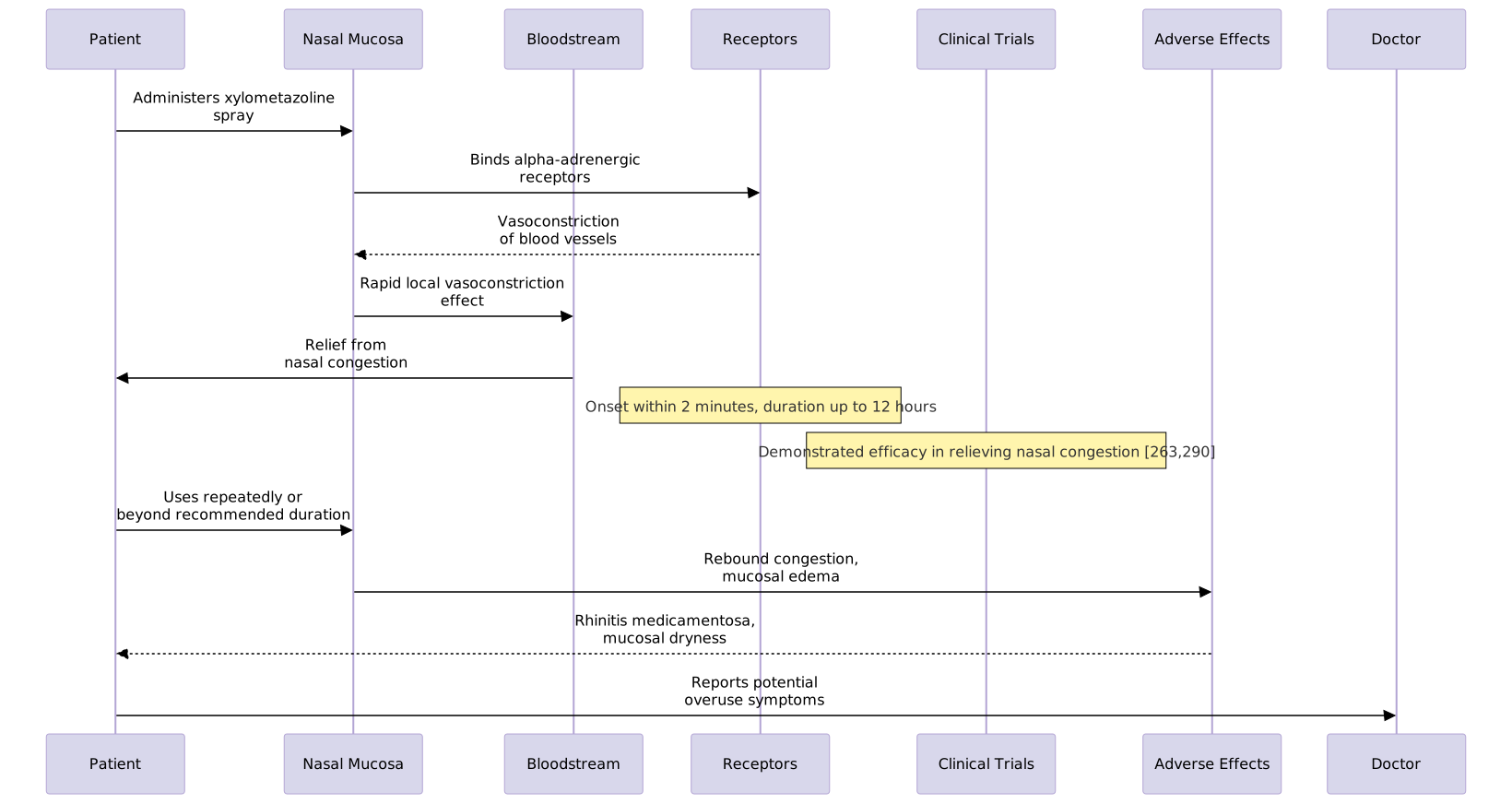
| Alpha-adrenergic receptors | Xylometazoline binds to these receptors on nasal blood vessels, causing vasoconstriction | [ 263 , 290 ] |
| Vasoconstriction | Results in reduced blood flow, decreasing nasal swelling and congestion | [ 263 , 290 ] |
| Onset of Action | Rapid, within 2 minutes post-application | [ 263 , 290 ] |
| Duration | Up to 12 hours of relief | [ 263 , 290 ] |
Pharmacokinetics and Delivery
| Delivery Method | Pharmacokinetic Profile | Notes |
|---|---|---|
| Nasal spray/drops | Localized effect with minimal systemic absorption | Rapid onset, localized vasoconstriction |
| Prolonged use risks | Systemic absorption increases, risking side effects | Rebound congestion (rhinitis medicamentosa) |
Clinical Efficacy
| Study Type | Sample Size | Findings | References |
|---|---|---|---|
| Randomized Controlled Trials | N=86, N=95, N=181 | Significant relief within minutes, lasting hours; superior to placebo | [ 263 , 290 ], [ 287 ] |
| Subjective Reports | Multiple case reports | Relief of nasal congestion, associated symptoms like earache and sore throat | [ 171 ] |
Safety Profile
| Common Side Effects | Details | Reference |
|---|---|---|
| Mucosal dryness | Due to vasoconstriction | [ 263 , 290 ] |
| Burning sensation | Temporary irritation | [ 263 , 290 ] |
| Rebound congestion | Rhinitis medicamentosa with prolonged use | [ 258 , 263 , 290 ] |
| Serious Risks | Details | Reference |
| ——————— | ————– | ————– |
| Hypertensive crisis | Especially with systemic absorption or overuse | [ 263 , 290 ] |
| Cardiovascular effects | Tachycardia, arrhythmias in sensitive individuals | [ 263 , 290 ] |
| Eye effects | Unintentional pupillary dilation if instilled in eye | [ 163 ] |
Usage Guidelines and Duration
| Population | Recommended Dose | Maximum Duration | Notes |
|---|---|---|---|
| Adults | 1-3 sprays or drops per nostril, 1-3 times daily | 5-7 days | [ 258 , 290 ] |
| Children 6-12 years | 1-2 drops/spray, 1-2 times daily | 3 days | [ 269 ] |
| Children <6 years | Contraindicated | Due to higher risk of adverse effects |
Contraindications and Precautions
| Conditions | Details | Reference |
|---|---|---|
| Hypersensitivity | Known allergy to xylometazoline or other sympathomimetics | [ 258 , 290 ] |
| Recent nasal surgery | Increased risk of adverse effects | [ 258 , 290 ] |
| Glaucoma or narrow-angle glaucoma | Contraindicated due to systemic absorption risks | [ 269 ] |
| Cardiovascular disease | Use with caution; systemic effects possible | [ 263 , 290 ] |
| Prolonged use (>7 days) | Rebound congestion risk increases | [ 258 , 268 , 290 ] |
Comparative Efficacy and Formulations
| Product | Concentration | Duration | Comments | References |
|---|---|---|---|---|
| Otrivin Pediatric | 0.05% | Up to 3 days | Suitable for children 6-12 | [ 258 ] |
| Zymelin | 0.1% | Max 5 days | For adults, rapid relief | [ 290 ] |
| Vibrocil Duo | 0.05% + other agents | 7 days | Rebound effect caution | [ 258 ] |
| Generic Xylometazoline | 0.1% | 5 days max | Widely available | [ 290 ] |
Summary
- Mechanism: Xylometazoline acts on alpha-adrenergic receptors causing rapid vasoconstriction, leading to nasal decongestion within minutes, with effects lasting up to 12 hours.
- Efficacy: Proven to significantly relieve nasal congestion, with multiple clinical trials confirming its rapid action and safety in short-term use.
- Safety: Generally safe for short-term use; risks include mucosal dryness, rebound congestion, and systemic cardiovascular effects if overused or used excessively.
- Guidelines: Limit use to 5-7 days; avoid in children under 6 years; monitor for signs of rebound congestion.
- Special Considerations: Caution in patients with hypertension, cardiovascular disease, or recent nasal surgery. Eye or systemic side effects necessitate proper administration.
References:
Summary Visualizations of Duration
This collection of extracts offers diverse insights into the pharmacological, clinical, and procedural aspects of intranasal drug use, especially focusing on xylometazoline and related agents. The following visualizations elucidate key concepts, relationships, temporal effects, and procedural sequences to deepen understanding of duration, efficacy, safety, and mechanisms of action.
Preface
The diagrams highlight treatment timelines, mechanisms of nasal decongestants, safety durations, and clinical procedures, emphasizing the importance of duration in efficacy and adverse effects.
Sequence Diagram: Intranasal Decongestant Application and Effects
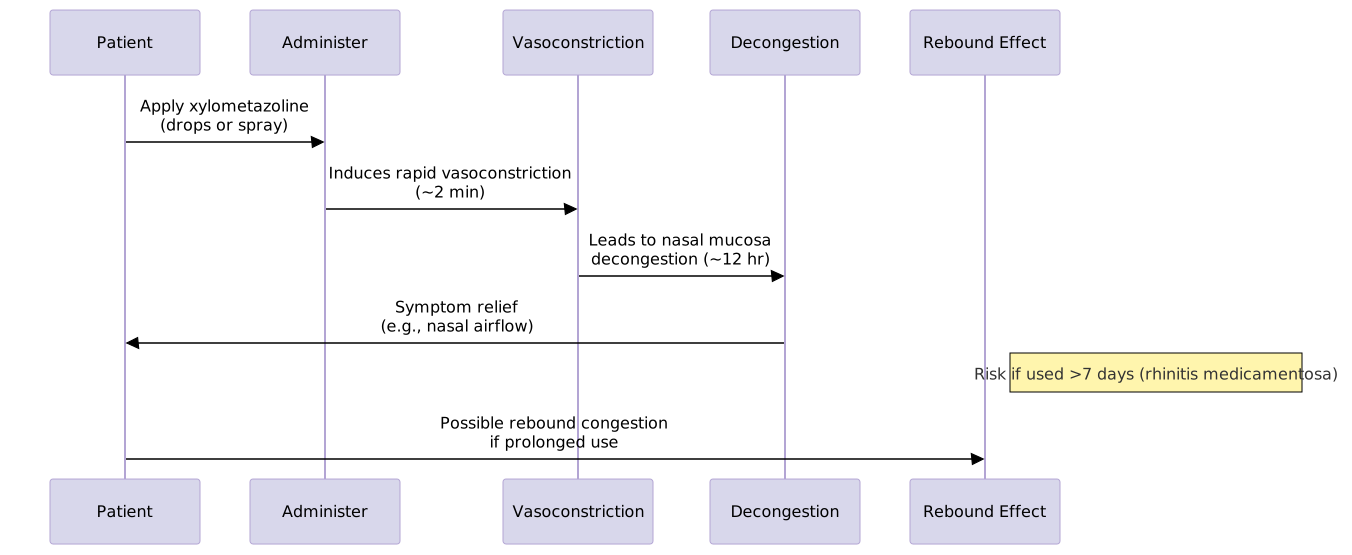
Main insight: Rapid onset (~2 min) with long-lasting relief (~12 hours); prolonged use (>7 days) risks rebound congestion.
Timeline: Duration of Efficacy and Safety in Nasal Decongestants
Main insight: Efficacy is rapid (~2 min), lasting up to 12 hours; safety recommendations limit use to under a week to prevent rebound effects.
Pie Chart: Distribution of Treatment Durations in Clinical Studies
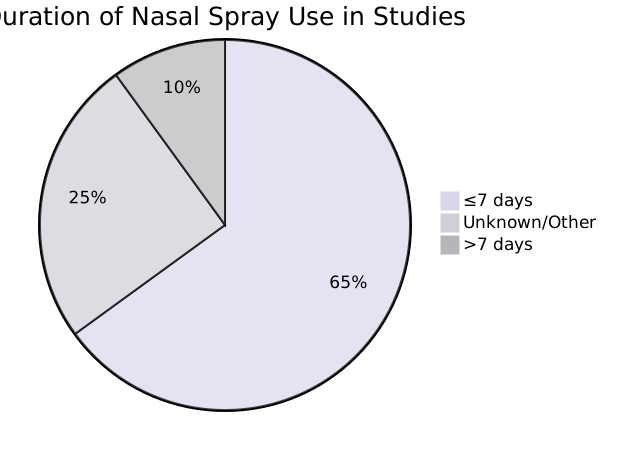
Main insight: Most clinical trials and safety protocols restrict nasal spray use to a maximum of 7 days, emphasizing duration as a key safety factor.
Flowchart: Decision Path for Intranasal Decongestant Use

Main insight: Short-term use (<7 days) provides rapid, effective relief; exceeding this increases rebound risk.
Mindmap: Key Concepts in Intranasal Decongestants
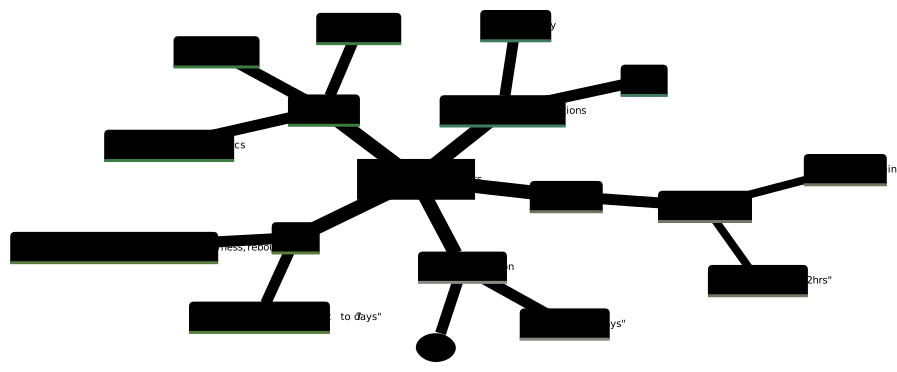
Main insight: Vasoconstrictive agents act rapidly; duration critically influences safety and efficacy, with clear guidelines to prevent rebound phenomena.
Bar Chart: Adverse Effects vs Duration of Use

Alternative:
While Mermaid lacks bar chart support, it’s known from the extracts that adverse effects like rebound congestion increase significantly after 7 days of use.
Timeline: Pharmacokinetics and Onset of Action
Main insight: The onset is rapid (~2 min), with therapeutic effects lasting hours, but safety limits restrict prolonged use.
Summary Table: Duration-Related Key Points
| Aspect | Duration | Key Point |
|---|---|---|
| Onset of action | ~2 minutes | Rapid vasoconstriction |
| Duration of relief | Up to 12 hours | Long-lasting decongestion |
| Safe maximum duration | ≤7 days | To prevent rebound congestion |
| Rebound congestion risk | >7 days | Increased likelihood of rhinitis medicamentosa |
| Clinical guidelines | 5-10 days in practice | Limiting use to prevent adverse effects |
Final notes:
- Duration is a critical factor influencing both efficacy and safety of intranasal decongestants.
- Rapid onset (~2 min) ensures quick relief, but prolonged use (>7 days) risks rebound congestion.
- Clinical protocols emphasize limiting treatment duration to optimize benefits and minimize harm.
This comprehensive set of visualizations aims to aid clinicians and researchers in understanding the temporal dynamics associated with intranasal therapies, supporting safer and more effective treatment strategies.
Citation Links
| 163 | https://www.researchgate.net/profile/Aaron-Trinidade | researchgate.net | 2023-12-01T11:05:16.000Z | |
|
The unilateral pupillary dilatation was caused by inadvertent instillation of sympathomimetic, (xylometazoline hydrochloride) in the eye during preparation for nasal surgery.
|
||||
| 171 | https://medex.com.bd/generics/1139/xylometazoline-hydrochloride | medex.com.bd | 2023-06-06T12:46:23.000Z | |
|
Compared to oxymetazoline, another imidazoline nasal decongestant, xylometazoline had a slightly faster onset of action although they had a similar duration of action. In one study, subjects with nasal congestion reported relief of earache and sore throat in addition to nasal decongestion: it is speculated that oxymetazoline mediates this effect by causing vasoconstriction of the nasal mucosa that contains the venous sinuses and nasal decongestion allows breathing through the nose, providing relief from sore throat caused by mouth breathing that dries and irritates the throat. Adults: Xylometazoline 0.1%: 2 or 3 drops in each nostril two to three times daily. Xylometazoline 0.1% should not be used for children under the age of 12 years. Children 6 to 12 years of age: Xylometazoline 0.05%: 2 or 3 drops in each nostril two or three times daily. Children less than 6 years of age: Xylometazoline 0.05%: 1 drop in each nostril two or three times daily. Infants less than 3 months: Not to be used in infants less than 3 months. Xylometazoline nasal drops is contraindicated in patients with transsphenoidal hypophysectomy or surgery exposing the dura mater. It is also contraindicated in patients who are hypersensitive to Xylometazoline. Each Xylometazoline nasal drop should be used by one person only to prevent any cross-infection. Patients are advised not to take decongestants for more than seven consecutive days. The following side-effects have occasionally been encountered: A burning sensation in the nose and throat Nausea and dryness of the nasal mucosa. Pregnancy category C. Xylometazoline should not be used during pregnancy. The use of Otrivin while breastfeeding should only take place on the instructions of a doctor. Xylometazoline Hydrochloride nasal drops for adults (0.1%) should not be used for children below 12 years.
|
||||
| 258 | https://farmacianovadamaia.pt/en/nose/9499-vibrocil-actilong-duo-nasal-spray-10ml.html | farmacianovadamaia.pt | 2023-10-04T06:40:18.000Z | |
|
The duration of treatment should not exceed 7 days, since chronic treatment with xylometazoline hydrochloride can cause edema of the nasal mucosa and hypersecretion due to increased sensitivity of the cells, a "rebound" effect (rhinitis).
|
||||
| 263 | https://www.haleonhealthpartner-gne.com/respiratory-health/brands/otrivin/science/xylometazoline-hydrochloride/ | haleonhealthpartner-gne.com | 2023-12-10T08:19:40.000Z | |
|
Otrivin offers several cold relief products specially formulated with xylometazoline hydrochloride Nasal formulations containing xylometazoline provide rapid and effective relief of nasal congestion. Xylometazoline constricts dilated blood vessels in the nasal mucosa1,2 Xylometazoline is a sympathomimetic agent that binds to alpha adrenergic receptors causing vasoconstriction leading to decongestion of the nasal mucosa. 1,2 This effect begins to take effect within 2 minutes of application and may remain active for up to 12 hours. A clinical study with xylometazoline demonstrated superiority to placebo at relieving nasal congestion3 Nasal sprays containing xylometazoline are proven to be significantly superior to placebo at relieving nasal congestion with decongestion effects shown for up to 12 hours. 1,3 Xylometazoline was also found to significantly improve individual common cold symptoms, such as easier breathing, leading to significantly greater patient satisfaction with treatment. 3 The activity of xylometazoline occurs as quickly as within 2 minutes. Xylometazoline provides rapid and long-lasting relief of nasal congestion1 Xylometazoline acts locally to constrict dilated blood vessels of the nasal mucosa1,2 Strong vasoconstriction of dilated blood vessels in the nasal mucosa1,2 Vasoconstriction subsequently results in decongestion of the nasal mucosa and neighbouring tissues of the pharynx, improving nasal airflow. Benefits of topical decongestants Topical decongestants in the form of nasal sprays, provide several advantages over oral decongestants: They act locally on the nasal mucosa as opposed to requiring absorption and transportation through the bloodstream Relief is immediate within a matter of minutes2 They provide a longer duration of action2
|
||||
| 268 | https://pillbuys.com/shop/xylometazoline | pillbuys.com | 2022-06-30T17:34:25.000Z | |
|
The value of Ems Mineral Salts in the treatment of rhinosinusitis in children: Prospective study on the efficacy of mineral salts versus xylometazoline in the topical nasal treatment of children Reversible cardiomyopathy due to chronic use of xylometazoline topical nasal spray Extractive spectrophotometric determination of chromium(III) in steels using 4-(2-pyridylazo)resorcinol and xylometazoline hydrochloride A Randomized Trial of 181 Patients to Topical Anesthesia with Lidocaine Versus Lidocaine Plus Xylometazoline for Unsedated Ultrathin Transnasal Upper Gastrointestinal Endoscopy Structure of xylometazoline (otrivin) hydrochloride, an α-adrenergic agonist Evaluation of the Effect of Xylometazoline on the Absorption of Zolmitriptan Nasal Spray Xylometazoline poisoning: A 40-fold nasal overdose caused by a compounding error in 3 children Xylometazoline overdos
|
||||
| 269 | https://www.mims.com/malaysia/drug/info/xylometazoline?mtype=generic | mims.com | 2023-03-25T01:48:10.000Z | |
|
Xylometazoline: Indication, Dosage, Side Effect, Precaution | Adult: As 0.1% drops: Apply 2-3 drops bid-tid into each nostril. As 0.1% metered-dose spray: 1 spray in each nostril 1-3 times daily. As 0.1% spray: 1 spray bid-tid into each nostril. Max duration: 5 days. Child: 6 years As 0.05% drops: Contraindicated. 6-12 years As 0.05% drops/spray: 1-2 drops/spray into each nostril 1 or 2 times daily. Max duration: 3 days. Undergo trans-sphenoidal hypophysectomy or surgery exposing dura mater, narrow angle glaucoma, atrophic rhinitis. Children 6 years. Significant: Local irritation, burning sensation in the nose and throat, rebound congestion. Hallucinations, restlessness, sleep disturbances in children. Rarely, transient visual impairment, tachycardia. General disorders and administration site conditions: Mucosal dryness. Respiratory, thoracic and mediastinal disorders: Dry nose, nasal discomfort. Avoid excessive or prolonged use. Enhanced adverse effects with other sympathomimetics. Risk of hypertensive crisis with MAOIs or TCAs. Description: Xylometazoline is a direct-acting sympathomimetic agent that produces vasoconstriction in the nasal mucosa thereby decreasing nasal blood flow and congestion. Onset: Within 5-10 minutes. Xylometazoline, CID=5709, https://pubchem.ncbi.nlm.nih.gov/compound/Xylometazoline ( accessed on Jan. 24, 2020) Nasal Decongestants & Other Nasal Preparations / Ophthalmic Decongestants, Anesthetics, Anti-Inflammatories R01AA07 - xylometazoline ; Belongs to the class of topical sympathomimetic agents used as nasal decongestants. Xylometazoline. Aqua Maris Fast Acting Decongestant (JGL North America LLC). Aqua Maris Kids Fast Acting Decongestant (JGL North America LLC). Accessed 28/02/2018. Xylometazoline Hydrochloride.
|
||||
| 287 | https://www.annfammed.org/content/10/3/241 | annfammed.org | 2023-12-10T14:42:27.000Z | |
|
Two trials compared 2 different doses of mometasone furoate. Characteristics of Trials Included in the Meta-Analysis In addition to intranasal corticosteroids, 5 trials14,18 - 21 prescribed antibiotics (amoxicillin, co-amoxiclav, or cefuroxime) to patients in both groups. One of these trials19 prescribed intranasal xylometazoline hydrochloride to all participants before administration of the study spray for the first 3 days. Two trials reported outcomes based on computed tomography scans of sinuses. All 6 included studies demonstrated adequate allocation concealment, blinding, percentage participation, and comparability of groups both at baseline and in provision of care apart from the intervention; however, 3 studies did not report the method of randomization (Table 2).
|
||||
| 290 | https://www.dovepress.com/articles.php?article_id=68558 | dovepress.com | 2023-05-30T17:03:10.000Z | |
|
Schutz D, Conzelmann C, Fois G, et al. Carrageenan containing over-the-counter nasal and oral sprays inhibit SARS-CoV-2 infection of airway epithelial cultures. 2021;320(5):L750 - L756. 00552.2020 Graf C, Bernkop-Schnurch A, Egyed A, Koller C, Prieschl-Grassauer E, Morokutti-Kurz M. Development of a nasal spray containing xylometazoline hydrochloride and iota-carrageenan for the symptomatic relief of nasal congestion caused by rhinitis and sinusitis. Int J Gen Med. 2018;11:275 - 283. doi:10.2147/IJGM.S167123 GroBe M, Ruetalo N, Businger R, et al. Evidence that quinine exhibits antiviral activity against SARS-CoV-2 infection in vitro.
|