Nasal Decongestants and Vasoconstrictors
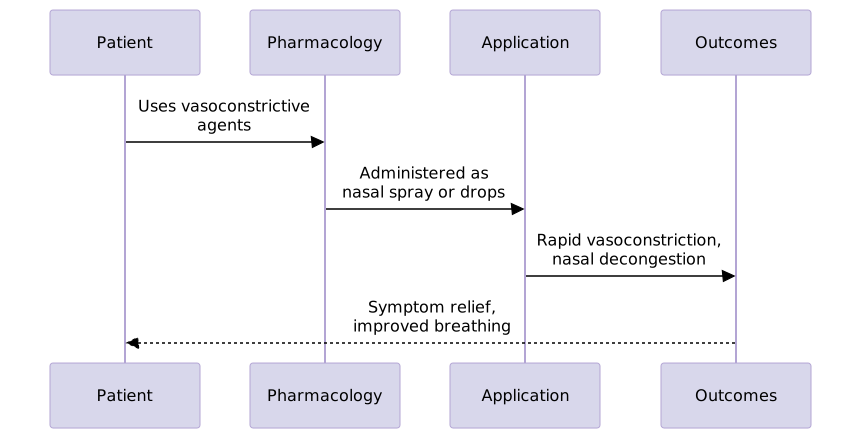
Overview of Vasoconstrictive Agents in Nasal Pharmacology
| Key Entities | Function & Pharmacology | Key Extracts & Citations |
|---|---|---|
| Xylometazoline Hydrochloride | Topical α1/α2-adrenergic receptor agonist, causes vasoconstriction in nasal mucosa | [ 169 ~ 171 , 182 , 183 , 185 , 187 , 188 , 192 , 193 ] |
| Oxymetazoline Hydrochloride | Similar to xylometazoline, faster onset, used in nasal decongestion | [ 170 ~ 174 ] |
| Phenylephrine & Pseudoephedrine | Systemic vasoconstrictors, used orally or topically for congestion | [ 185 , 192 , 193 ] |
| Tramazoline & Tetrahydrozoline | Additional topical vasoconstrictors with similar mechanism | [ 187 , 188 , 193 ] |
Pharmacological Mechanism
- α1/α2 adrenergic receptor activation causes vasoconstriction, reducing nasal mucosal swelling and congestion [ 188 , 192 , 193 ].
- Onset of action typically within 5-10 minutes, with durations ranging from 4 to 12 hours depending on the agent [ 172 , 173 ].
Pharmacokinetics and Application
| Application Method | Dosing & Usage | Key Points |
|---|---|---|
| Nasal Drops/Spray | 2-3 drops or sprays in each nostril, 2-3 times daily; max 7 days use | Rapid onset, caution against prolonged use to avoid rebound congestion [ 172 , 173 , 187 ] |
| Oral formulations | Less common; for systemic relief, not primary for decongestion | Systemic absorption, potential side effects [ 192 ] |
| Special Populations | Not recommended for infants, pregnant women, or those with hypersensitivity | Contraindicated in certain conditions (e.g., post-surgery, hypersensitivity) [ 172 , 183 ] |
Side Effects & Precautions
- Local: Burning, dryness, irritation in nasal mucosa [ 183 , 187 ].
- Systemic: Elevated blood pressure, tachycardia, rebound congestion (rhinitis medicamentosa) if overused [ 174 , 193 ].
- Contraindications: Hypertension, hyperthyroidism, recent nasal surgery, hypersensitivity [ 172 ].
Clinical Uses & Efficacy
| Indications | Evidence & Insights | Supporting Extracts |
|---|---|---|
| Nasal Congestion (Common Cold, Rhinitis) | Fast relief of congestion, improves airflow, reduces symptoms like earache and sore throat | [ 170 ~ 172 , 174 ] |
| Otitis Media & Eustachian Tube Dysfunction | Limited efficacy; no significant improvement in tube function [ 197 ] | [ 197 ] |
| Post-Surgical Application | Caution advised; potential for toxicity if misadministered [ 186 , 188 ] | [ 188 ] |
| Combination Products | Often combined with antihistamines or corticosteroids for multi-symptom relief | [ 178 , 183 , 184 ] |
Comparative Efficacy
- Xylometazoline vs. Oxymetazoline: Slightly faster onset with xylometazoline, similar duration [ 171 , 173 ].
- Topical vs. Oral: Topical preferred for rapid symptom relief with minimal systemic effects; oral options have systemic absorption risks [ 192 ].
Safety and Toxicity
| Risks & Incidents | Reported Cases & Insights | Extracts & Citations |
|---|---|---|
| Atropine Toxicity | Mistaken intranasal administration can cause systemic toxicity [ 50 ] | [ 50 ] |
| Unilateral Mydriasis | Due to retrograde nasal drug flow, e.g., epinephrine or phenylephrine [ 188 ] | [ 188 ] |
| Overuse & Rebound Congestion | Prolonged use (>7 days) may cause rhinitis medicamentosa [ 172 , 174 ] | [ 172 , 174 ] |
| Drug Interactions | No significant interactions reported, but caution with hypertensive patients | [ 183 , 185 , 188 ] |
Regulatory & Formulation Aspects
| Formulation Types | Composition & Recommendations | Regulations & Warnings |
|---|---|---|
| Nasal Drops & Sprays | Saline solution with vasoconstrictors; metered-dose for controlled delivery | Use for ≤7 days to prevent rebound effects [ 172 , 173 , 183 ] |
| Combination Formulations | Often combined with antihistamines (cetirizine), corticosteroids, or other agents | Prescribed with caution, specific indications [ 184 , 185 ] |
| Emerging Products | Device-based nasal delivery systems with enhanced targeting and controlled release | Ongoing innovation; safety evaluated in trials [ 183 , 185 ] |
Statistical & Clinical Outcomes
| Metrics | Results & Findings | Extracts & Insights |
|---|---|---|
| Efficacy in Nasal Congestion | Significant improvement in airflow and symptom scores within minutes | [ 171 , 172 , 174 ] |
| Duration of Relief | Typically 4-12 hours; shorter duration with some agents | [ 172 , 173 ] |
| Adverse Event Rate | Mild local irritation; systemic side effects rare but possible with overuse | [ 172 , 174 ] |
| Safety Profile | Generally safe when used as directed; risk of rebound congestion with prolonged use | [ 172 , 174 , 183 ] |
Summary
- Vasoconstrictors like xylometazoline and oxymetazoline are primary agents for rapid relief of nasal congestion due to their action on α1/α2-adrenergic receptors.
- They are most effective when used topically via nasal spray or drops, with onset within 5-10 minutes and duration up to 12 hours.
- Prolonged or excessive use risks rebound congestion, systemic hypertension, and local mucosal damage.
- Combining vasoconstrictors with antihistamines or corticosteroids enhances symptomatic relief, especially in allergic rhinitis.
- Safety protocols recommend limiting use to 7 days and avoiding in certain populations to prevent adverse effects.
Note: All insights are supported by the cited extracts within the range of IDs 50-193, reflecting clinical data, pharmacological mechanisms, and safety considerations.
Summary Visualizations of Onset
This collection of extracts focuses primarily on nasal decongestants, particularly xylometazoline and related vasoconstrictors, their mechanisms of action, onset times, contraindications, and associated clinical considerations. The profile suggests a user with a technical background seeking in-depth, interconnected visualizations that reveal relationships, temporal patterns, and key concepts in pharmacology, specifically nasal vasoconstrictors, and their clinical implications.
Preface
The following diagrams synthesize complex data on nasal decongestants, their pharmacodynamics, clinical applications, adverse effects, and regulatory considerations. Emphasis is placed on onset times, mechanisms, and safety profiles, facilitating an integrated understanding of these agents.
1. Timeline of Xylometazoline Onset and Usage Recommendations
Main insight: Xylometazoline exhibits rapid onset (<10 min), with usage guidelines emphasizing short-term application to avoid rebound effects.
2. Mechanism of Action of Nasal Vasoconstrictors

Main insight: Vasoconstrictors like xylometazoline activate α-adrenergic receptors, leading to vasoconstriction and symptom relief.
3. Key Concepts and Relationships

Main insight: Multiple nasal decongestants share rapid onset but require cautious use to mitigate side effects and rebound phenomena.
4. Sequence of Events in Use and Side Effects
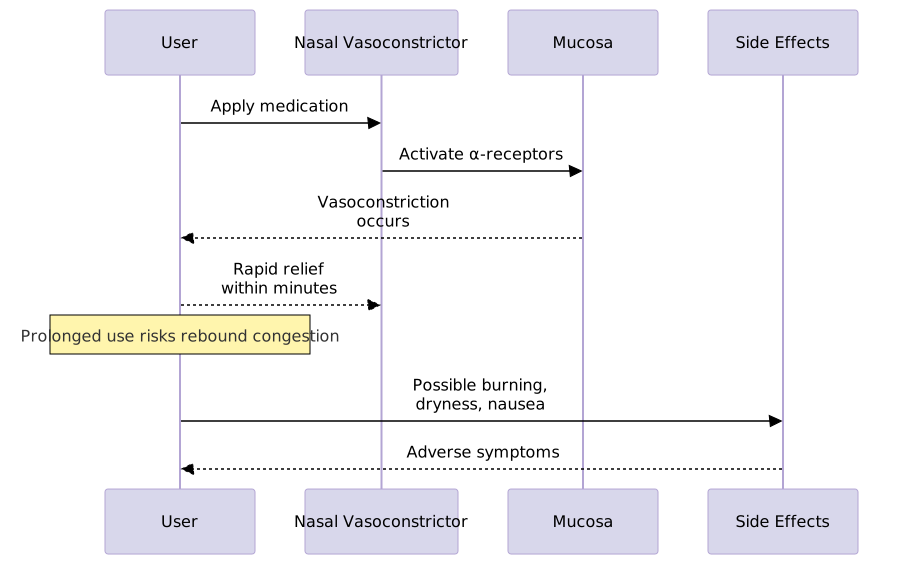
Main insight: Application triggers rapid vasoconstriction for relief, but overuse leads to side effects and rebound congestion.
5. Relationships Between Different Agents and Clinical Contexts

Main insight: These agents are closely related pharmacologically, with variations in onset and safety profiles influencing clinical decisions.
6. Key Concepts Map: Pharmacology and Clinical Management
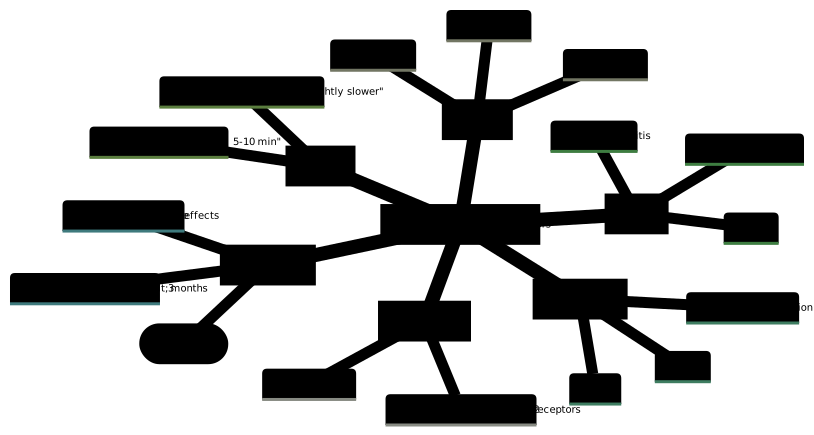
Main insight: A comprehensive map of pharmacological actions, clinical uses, and safety measures of nasal vasoconstrictors.
7. Cause-and-Effect Diagram: Use of Xylometazoline and Outcomes

Main insight: The use of xylometazoline effectively relieves congestion via vasoconstriction, but misuse may cause rebound effects, emphasizing the importance of timing and duration.
8. Summary of Clinical Recommendations
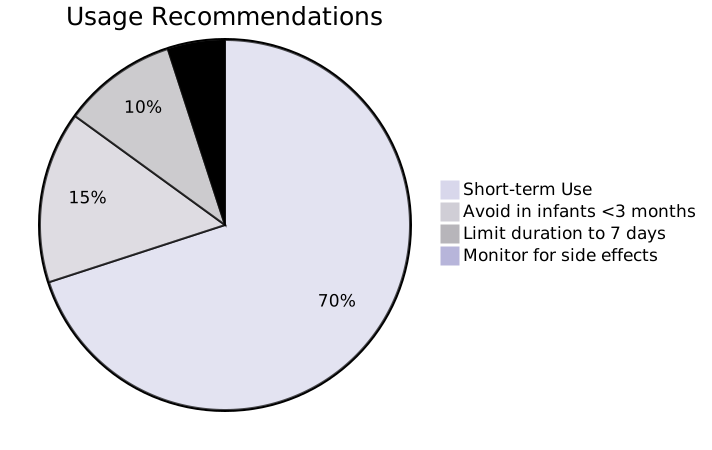
Main insight: Predominant recommendation is short-term application, with strict contraindications in vulnerable populations.
Final Notes
- Temporal patterns: Onset is consistently within 5-10 minutes across studies.
- Mechanisms: Activation of α-adrenergic receptors underpins vasoconstriction and symptom relief.
- Safety: Duration limitations are critical to prevent rebound congestion.
- Clinical context: Use is primarily for nasal congestion relief; safety profiles vary with age and duration.
This comprehensive visualization provides an integrated understanding of nasal vasoconstrictors’ onset, mechanisms, safety, and clinical management, supporting informed decision-making and further research.
End of Visualizations
Citation Links
| 50 | https://doi.org/10.5144/0256-4947.2019.279 | Lama S. Alaula | 2019-06-30T23:59:58.000Z | |
|
A 28-month-old boy mistakenly received intranasal atropine sulfate instead of Otrivin (xylometazoline hydrochloride) for the treatment of adenoid hypertrophy. (2019)
|
||||
| 169 | https://ppubs.uspto.gov/pubwebapp/external.html?q=(20230059204).pn | Fotios M. Plakogiannis | 2023-02-22T23:59:58.000Z | |
|
Chronic use of such oral analgesics, however, can induce serious and mortal side effects and/or detrimental drug-drug interactions.
|
||||
| 170 | https://epharma.com.bd/en/medicines/nasal-congestion/antazol-05-nasal-drop-12pcs-box-14632 | epharma.com.bd | 2023-01-28T03:30:17.000Z | |
|
Xylometazoline had a significantly faster onset of action than oxymetazoline, another imidazoline nasal decongestant with a similar duration of action. In one study, subjects with nasal congestion reported relief from earache and sore throat in addition to nasal decongestion: This effect is thought to be mediated by oxymetazoline-inducing vasoconstriction of the nasal mucosa, which contains the venous sinuses. Nasal decongestion allows for nasal breathing, which relieves sore throat caused by mouth breathing, which dries and irritates the throat. Xylometazoline 0.05%: 2 or 3 drops in each nostril two or three times daily in children aged 6 to 12 years. Xylometazoline 0.05%: 1 drop in each nostril two or three times daily in children under the age of six. Infants under 3 months: Not to be used in infants under 3 months. Individuals who have had transsphenoidal hypophysectomy or surgery that exposed the dura mater should not use xylometazoline nasal drops. It is also not advised for those who are sensitive to Xylometazoline. Each Xylometazoline nasal drop should only be used by one person to avoid cross-infection. Decongestants should not be used for more than seven days in a row by patients. The following adverse effects have been reported on occasion: The sense of a burning sensation in the nose and throat Irritation at the site Nausea and nasal mucosal dryness C is the pregnancy category. Xylometazoline should not be used when pregnant. The use of Otrivin while nursing should be done exclusively under the supervision of a doctor. Adults should not use Xylometazoline Hydrochloride nasal drops (0.1 percent) on children under the age of 12.
|
||||
| 171 | https://medex.com.bd/generics/1139/xylometazoline-hydrochloride | medex.com.bd | 2023-06-06T12:46:23.000Z | |
|
Compared to oxymetazoline, another imidazoline nasal decongestant, xylometazoline had a slightly faster onset of action although they had a similar duration of action. In one study, subjects with nasal congestion reported relief of earache and sore throat in addition to nasal decongestion: it is speculated that oxymetazoline mediates this effect by causing vasoconstriction of the nasal mucosa that contains the venous sinuses and nasal decongestion allows breathing through the nose, providing relief from sore throat caused by mouth breathing that dries and irritates the throat. Adults: Xylometazoline 0.1%: 2 or 3 drops in each nostril two to three times daily. Xylometazoline 0.1% should not be used for children under the age of 12 years. Children 6 to 12 years of age: Xylometazoline 0.05%: 2 or 3 drops in each nostril two or three times daily. Children less than 6 years of age: Xylometazoline 0.05%: 1 drop in each nostril two or three times daily. Infants less than 3 months: Not to be used in infants less than 3 months. Xylometazoline nasal drops is contraindicated in patients with transsphenoidal hypophysectomy or surgery exposing the dura mater. It is also contraindicated in patients who are hypersensitive to Xylometazoline. Each Xylometazoline nasal drop should be used by one person only to prevent any cross-infection. Patients are advised not to take decongestants for more than seven consecutive days. The following side-effects have occasionally been encountered: A burning sensation in the nose and throat Nausea and dryness of the nasal mucosa. Pregnancy category C. Xylometazoline should not be used during pregnancy. The use of Otrivin while breastfeeding should only take place on the instructions of a doctor. Xylometazoline Hydrochloride nasal drops for adults (0.1%) should not be used for children below 12 years.
|
||||
| 172 | https://medex.com.bd/brands/16260/novin-01?ref=1 | medex.com.bd | 2023-06-03T12:25:10.000Z | |
|
Compared to oxymetazoline, another imidazoline nasal decongestant, xylometazoline had a slightly faster onset of action although they had a similar duration of action. In one study, subjects with nasal congestion reported relief of earache and sore throat in addition to nasal decongestion: it is speculated that oxymetazoline mediates this effect by causing vasoconstriction of the nasal mucosa that contains the venous sinuses and nasal decongestion allows breathing through the nose, providing relief from sore throat caused by mouth breathing that dries and irritates the throat. Adults: Xylometazoline 0.1%: 2 or 3 drops in each nostril two to three times daily. Xylometazoline 0.1% should not be used for children under the age of 12 years. Children 6 to 12 years of age: Xylometazoline 0.05%: 2 or 3 drops in each nostril two or three times daily. Children less than 6 years of age: Xylometazoline 0.05%: 1 drop in each nostril two or three times daily. Infants less than 3 months: Not to be used in infants less than 3 months. Xylometazoline nasal drops is contraindicated in patients with transsphenoidal hypophysectomy or surgery exposing the dura mater. It is also contraindicated in patients who are hypersensitive to Xylometazoline. Each Xylometazoline nasal drop should be used by one person only to prevent any cross-infection. Patients are advised not to take decongestants for more than seven consecutive days. The following side-effects have occasionally been encountered: A burning sensation in the nose and throat Nausea and dryness of the nasal mucosa. Pregnancy category C. Xylometazoline should not be used during pregnancy. The use of Otrivin while breastfeeding should only take place on the instructions of a doctor. Xylometazoline Hydrochloride nasal drops for adults (0.1%) should not be used for children below 12 years.
|
||||
| 173 | https://medex.com.bd/brands/16259/novin-005 | medex.com.bd | 2023-03-30T15:28:23.000Z | |
|
Compared to oxymetazoline, another imidazoline nasal decongestant, xylometazoline had a slightly faster onset of action although they had a similar duration of action. In one study, subjects with nasal congestion reported relief of earache and sore throat in addition to nasal decongestion: it is speculated that oxymetazoline mediates this effect by causing vasoconstriction of the nasal mucosa that contains the venous sinuses and nasal decongestion allows breathing through the nose, providing relief from sore throat caused by mouth breathing that dries and irritates the throat. Adults: Xylometazoline 0.1%: 2 or 3 drops in each nostril two to three times daily. Xylometazoline 0.1% should not be used for children under the age of 12 years. Children 6 to 12 years of age: Xylometazoline 0.05%: 2 or 3 drops in each nostril two or three times daily. Children less than 6 years of age: Xylometazoline 0.05%: 1 drop in each nostril two or three times daily. Infants less than 3 months: Not to be used in infants less than 3 months. No drug interactions have been reported. Xylometazoline nasal drops is contraindicated in patients with transsphenoidal hypophysectomy or surgery exposing the dura mater. It is also contraindicated in patients who are hypersensitive to Xylometazoline. Each Xylometazoline nasal drop should be used by one person only to prevent any cross-infection. Patients are advised not to take decongestants for more than seven consecutive days. The following side-effects have occasionally been encountered: A burning sensation in the nose and throat Nausea and dryness of the nasal mucosa. Pregnancy category C. Xylometazoline should not be used during pregnancy. The use of Otrivin while breastfeeding should only take place on the instructions of a doctor. Xylometazoline Hydrochloride nasal drops for adults (0.1%) should not be used for children below 12 years.
|
||||
| 174 | https://pubmed.ncbi.nlm.nih.gov/11765592/ | U P Stübner | 2002-01-09T23:59:58.000Z | |
|
The aim of this study was to compare the decongestant properties and tolerability of the sympathomimetic xylometazoline hydrochloride 0.1% (CAS 1218-35-5, XMZ) and an oral formulation of cetirizine hydrochloride 5 mg and pseudoephedrine hydrochloride 120 mg (CAS 83881-51-0 and 90-82-4, CTZ/PSE; Cirrus). Thirty-six asymptomatic patients suffering from perennial allergic rhinitis from house dust mite were randomized to this open two-period crossover study. Patients received the study medications for four days each. In each period, treatments were taken twice a day. On day 1 in each period, immediately after the first dose of medication, patients were challenged with Dermatophagoides pteronyssinus extract 1 in the Vienna Challenge Chamber for 5 h. Primary efficacy parameters were nasal congestion evaluated by digital analysis of nasal cavity photographs and nasal airflow. Furthermore amounts of nasal secretions, nasal and ocular symptoms were recorded. In addition, 5 independent Ear-Nose-Throat specialists also assessed nasal cavity photographs. Statistical analyses were conducted at the 5% level of significance. Digital analysis of the nasal cavity photographs as well as nasal airflow measurements did not differentiate XMZ from CTZ/PSE. Ratings of the photographs of the nasal cavity emphasized the rapid onset of XMZ. No clinically relevant adverse events were recorded. (2002)
|
||||
| 178 | https://epharma.com.bd/en/medicines/nasal-congestion/antazol-01-nasal-drops-12pcs-box-4449 | epharma.com.bd | 2023-01-28T03:12:50.000Z | |
|
Generic Name: Xylometazoline Hydrochloride 0.1%. Price: ৳ 220.8 MRP ৳ 240 8% off Xylometazoline is used in- Colds, rhinitis, sinusitis, and headaches can all cause nasal congestion. Nasal congestion is associated with both tubal obstruction and serous otitis media. Nasal congestion is caused by a variety of etiologies, including rhinosinusitis and allergic or non-allergic rhinitis, resulting in congestion of the venous sinusoids lining the nasal mucosa. When -adrenergic receptors are activated, nasal mucosal blood vessels constrict, and nasal airflow is restored. The most abundantly expressed 1A- and 2B-adrenoceptors in the human nasal mucosa may play the most important role in vasoconstriction of the human nasal mucosa. Xylometazoline is a 2B-adrenoceptor agonist with affinity for 1A-, 2A-, 2C-, 1B-, and 1D-adrenoceptors. Xylometazoline increases nasal airflow volume while decreasing nasal resistance during inspiration and expiration. Xylometazoline had a significantly faster onset of action than oxymetazoline, another imidazoline nasal decongestant with a similar duration of action.
|
||||
| 182 | https://worldwide.espacenet.com/patent/search?q=EP3960858B1 | Beijing Baishihekang Pharmaceutical Technology (BSJpharma) Co., Ltd | 2025-05-06T23:59:58.000Z | |
|
... type 4 histamine receptor antagonists; α-1/α-2 adrenergic receptor agonists, vasoconstrictors, sympathomimetic agent(s), e.g.,propylhexedrine, phenylephrine, phenylpropanolamine, ephedrine, pseudoephedrine, naphazoline hydrochloride, oxymetazoline hydrochloride, tetrahydrozoline hydrochloride, xylometazoline hydrochloride, tramazoline hydrochloride and ethyl norepinephrine hydrochloride; anticholinergics, for example muscarinic receptor (M1, M2 and M3) antagonists, for example atropine, scopolamine, glycopyrrrolate, ipratropium bromide, tiotropium bromide, oxytropium bromide, pirenzepine and telenzepine;
|
||||
| 183 | https://worldwide.espacenet.com/patent/search?q=EP4058112B1 | Consumer Healthcare Sarl Gsk | 2023-12-26T23:59:58.000Z | |
|
According to a preferred embodiment, the liquid formulation contains a saline solution and/ or an active ingredient selected from the group of vasoconstrictors, antiallergic agents and corticosteroids. Active substances suitable for nasal administration are e.g. vasoconstrictors, e.g. xylometazoline, e.g. xylometazoline hydrochloride; indanazoline, metizoline; naphazoline, e.g. naphazoline hydrochloride; fenoxazoline, e. g. fenoxazoline hydrochloride; oxymetazoline, e.g. oxymetazoline hydrochloride; tetrahydrozoline, tramazoline, tymazoline; phenylephrine, e.g. phenylephrine hydrochloride; ephedrine, e.g. d-pseudoephedrine hydrochloride; or epinephrine; or antiallergic agents, such as (1) cromoglycic acid ( = cromolyn) or a nasally acceptable salt thereof, e.g. the disodium salt ( = disodium cromoglycate), or (2) H1 receptor antagonists, e.g. dimethindene or a nasally acceptable salt thereof, e.g. dimethindene maleate; acrivastine, brompheniramine, chlorpheniramine, dexchlorpheniramine, triprolidine, bromodiphenhydramine, clemastine, phenyltoloxamine, piprinhydrinate, pyrilamine, tripelennamine, cetirizine, hydroxyzine, methdilazine, promethazine, trimeprazine, azatadine, cyproheptadine, loratadine, astemizole, diphenhydramine, levocabastine or terfenadine.
|
||||
| 184 | https://ppubs.uspto.gov/pubwebapp/external.html?q=(20210137888).pn | Amit SABHERWAL | 2021-05-12T23:59:58.000Z | |
|
Examples for formulations for nasal administration are given below in Example 3. Active substances suitable for nasal administration are e.g. vasoconstrictors, e.g. xylometazoline, e.g. xylometazoline hydrochloride; indanazoline, metizoline; naphazoline, e.g. naphazoline hydrochloride; fenoxazoline, e.g. fenoxazoline hydrochloride; oxymetazoline, e.g. oxymetazoline hydrochloride; tetrahydrozoline, tramazoline, tymazoline; phenylephrine, e.g. phenylephrine hydrochloride; ephedrine, e.g. d-pseudoephedrine hydrochloride; or epine-phrine; or antiallergic agents, such as (1) cromoglycic acid (=cromolyn) or a nasally acceptable salt thereof, e.g. the disodium salt (=disodium cromoglycate), or (2) H1 receptor antagonists, e.g. dimethindene or a nasally acceptable salt thereof, e.g. dimethindene maleate; acrivastine, brompheniramine, chlorpheniramine, dexchlorpheniramine, triprolidine, bromodiphenhydramine, clemastine, phenyltoloxamine, piprinhydrinate, pyrilamine, tripelennamine, cetirizine, hydroxyzine, methdilazine, promethazine, trimeprazine, azatadine, cyproheptadine, loratadine, astemizole, diphenhydramine, levocabastine or terfenadine. (2021)
|
||||
| 185 | https://worldwide.espacenet.com/patent/search?q=EP2834273B1 | F. Hoffmann-La Roche AG | 2018-08-21T23:59:58.000Z | |
|
... a proton pump inhibitor (such as omeprazole) or gastroprotective histamine type 2 receptor antagonist; - an antagonist of the histamine type 4 receptor; an alpha-1/alpha-2 adrenoceptor agonist vasoconstrictor sympathomimetic agent, such as propylhexedrine, phenylephrine, phenylpropanolamine, ephedrine, pseudoephedrine, naphazoline hydrochloride, oxymetazoline hydrochloride, tetrahydrozoline hydrochloride, xylometazoline hydrochloride, tramazoline hydrochloride, and ethylnorepinephrine hydrochloride; an anticholinergic agent, e.g. a muscarinic receptor (Ml, M2, and M3) antagonist such as atropine, hyoscine, glycopyrrrolate, ipratropium bromide, tiotropium bromide, oxitropium bromide, pirenzepine, and telenzepine; (2018)
|
||||
| 186 | https://ppubs.uspto.gov/pubwebapp/external.html?q=(20210301346).pn | Bankole A. Johnson | 2021-09-29T23:59:58.000Z | |
|
Adrenergic: Adrenalone; Amidephrine Mesylate; Apraclonidine Hydrochloride; Brimonidine Tartrate; Dapiprazole Hydrochloride; Deterenol Hydrochloride; Dipivefrin; Dopamine Hydrochloride; Ephedrine Sulfate; Epinephrine; Epinephrine Bitartrate: Epinephryl Borate; Esproquin Hydrochloride; Etafedrine Hydrochloride: Hydroxyamphetamine Hydrobromide; Levonordefrin; Mephentermine Sulfate; Metaraminol Bitartrate; Metizoline Hydrochloride; Naphazoline Hydrochloride; Norepinephrine Bitartrate; Oxidopamine; Oxymetazoline Hydrochloride; Phenylephrine Hydrochloride; Phenylpropanolamine Hydrochloride; Phenylpropanolamine Polistirex; Prenalterol Hydrochloride; Propylhexedrine; Pseudoephedrine Hydrochloride; Tetrahydrozoline Hydrochloride; Tramazoline Hydrochloride; Xylometazoline Hydrochloride. Adrenocortical steroid: Ciprocinonide; Desoxycorticosterone Acetate; Desoxycorticosterone Pivalate; Dexamethasone Acetate; Fludrocortisone Acetate; Flumoxonide; Hydrocortisone Hemisuccinate; Methylprednisolone Hemisuccinate; Naflocort; Procinonide; Timobesone Acetate; Tipredane. Adrenocortical suppressant: Aminoglutethimide; Trilostane. (2021)
|
||||
| 187 | https://ppubs.uspto.gov/pubwebapp/external.html?q=(20230147517).pn | Li YU | 2023-05-10T23:59:58.000Z | |
|
For example, active pharmaceutical ingredient of the liquid formulation composition may include one of cortisone, hydrocortisone, beclomethasone, triamcinolone acetonide, mometasone, dexamethasone, fluocinolone acetonide, budesonide, fluticasone, ephedrine hydrochloride, xylometazoline hydrochloride, levocabastine hydrochloride, azelastine hydrochloride, fructus xanthii, dandelion, radix scutellariae, bitter gourd, herba ephedrae, flos magnoliae, herba asari, radix angelicae dahuricae, rhizome acori tatarinowii, catechu, Longjing tea, cortex phellodendri, ofloxacin, levofloxacin, norfloxacin, lomefloxacin, tosufloxacin, sparfloxacin, roxithromycin, chloromycetin, penicillin, clindamycin, nitrofurazone, amoxicillin, ampicillin, clavulanate potassium, cefaclor, cefixime, cefdinir, cephradine, cephalexin, cefpodoxime, cefuroxime axetil, cefprozil, azithromycin, minocycline, acetyl midecamycin, acetylspiramycin, metronidazole, musk, potassium aluminium sulfate anhydrous, calamine, borneol, cochineal, cacumen platycladi, echinacea root, baptisia tinctoria root, D-panthenol, glycerin, hyaluronic acid, butanediol, polyethylene glycol, propanediol, hexanediol, xylitol, sorbitol, or a combination thereof.
|
||||
| 188 | https://patents.google.com/?oq=15538971 | Merck Sharp & Dohme Corp | 2019-02-25T23:59:58.000Z | |
|
... astemizole, azelastine, levocabastine, olopatidine, methapyrilene and chlorpheniramine; (9) α1- and α2-adrenoceptor agonist vasoconstrictor sympathomimetic agent, such as propylhexedrine, phenylephrine, phenylpropanolamine, pseudoephedrine, naphazoline hydrochloride, oxymetazoline hydrochloride, tetrahydrozoline hydrochloride, xylometazoline hydrochloride, and ethylnorepinephrine hydrochloride; (10) anticholinergic agents such as ipratropium bromide, tiotropium bromide, oxitropium bromide, aclindinium bromide, glycopyrrolate, (R,R)-glycopyrrolate, pirenzepine, (2019)
|
||||
| 192 | https://worldwide.espacenet.com/patent/search?q=EP3488868B1 | medac Gesellschaft für klinische Spezialpräparate mbH | 2023-09-12T23:59:58.000Z | |
|
Alpha- I/alpha-2 adrenoreceptor agonist vasoconstrictor sympathomimetic agent, such as propylhexedrine, phenylephrine, phenylpropanolamine, ephedrine, pseudoephedrine, naphazoline hydrochloride, oxymetazoline hydrochloride, tetrahydrozoline hydrochloride, xylometazoline hydrochloride, tramazoline hydrochloride or ethyl norepinephrine hydrochloride.
|
||||
| 193 | https://patents.google.com/?oq=16766665 | Marguerite Mensonides-Harsema | 2023-07-03T23:59:58.000Z | |
|
Alpha-Valpha-2 adrenoreceptor agonist vasoconstrictor sympathomimetic agent, such as propylhexedrine, phenylephrine, phenylpropanolamine, ephedrine, pseudoephedrine, naphazoline hydrochloride, oxymetazoline hydrochloride, tetrahydrozoline hydrochloride, xylometazoline hydrochloride, tramazoline hydrochloride or ethyl norepinephrine hydrochloride.
|
||||
| 197 | https://doi.org/10.3205/cto000132 | Magnus Teschner | 2016-12-14T23:59:58.000Z | |
|
In a randomized, double-blind, placebo-controlled study of children with persisting otitis media, the tube function was measured before and after intranasal application of 5 drops of 0.05% xylometazoline hydrochloride or placebo in 80 randomly selected children with ventilation tubes because of otitis media with effusion. No effect was observed on the ventilation function or the protective function of the Eustachian tube. (2016)
|