Xylometazoline Hydrochloride: Pharmacology, Clinical Uses, and Safety Profile
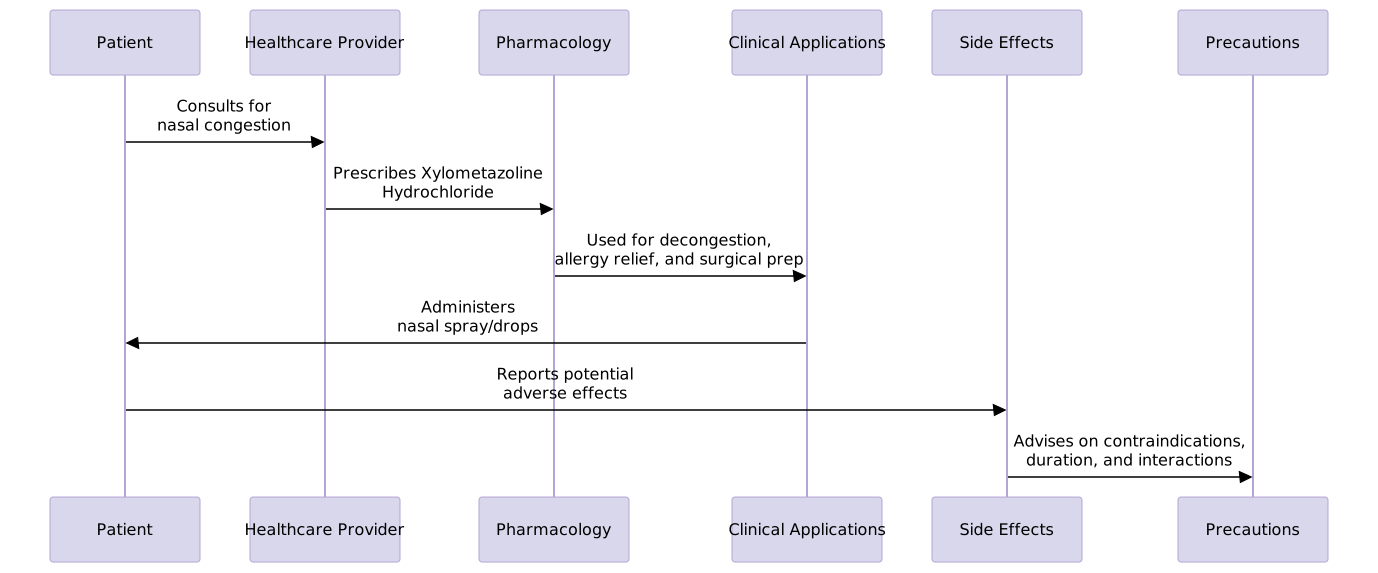
Pharmacological Profile
| Aspect | Details | References |
|---|---|---|
| Active Ingredient | Xylometazoline Hydrochloride | [ 159 , 262 , 293 , 294 , 298 , 301 ] |
| Mechanism of Action | Sympathomimetic agent causing vasoconstriction of nasal mucosa blood vessels, reducing swelling and congestion | [ 294 , 297 , 299 ] |
| Pharmacokinetics | Minimal systemic absorption following nasal application; systemic effects possible with overuse or accidental ingestion | [ 294 , 297 ] |
| Formulations | Nasal drops (0.05%-0.1%), nasal spray (0.1%), tablets (less common) | [ 159 , 292 , 298 , 301 ] |
Clinical Uses
| Application Area | Specific Uses | Supporting Extracts | Key Notes |
|---|---|---|---|
| Nasal Congestion | Symptomatic relief in common cold, allergic rhinitis, sinusitis | [ 159 , 292 , 294 , 298 , 301 ] | Usually 2-3 drops/sprays every 8-10 hours, max 5-7 days to prevent rebound congestion |
| Preoperative Decongestion | Reduce nasal swelling before ENT procedures | [ 295 , 296 ] | Utilized in procedures requiring clear nasal passages |
| Otitis Media (Eustachian Tube Function) | Investigational; no significant benefit demonstrated | [ 47 ] | Studies show no significant improvement over placebo |
| Adjunct in Nasal Polyps | Combined with corticosteroids like budesonide for intrapolyp injection | [ 295 ] | For patients with nasal polyps, avoiding systemic steroids when possible |
Safety and Side Effects
| Effect Type | Description | Extracts | Critical Considerations |
|---|---|---|---|
| Common Side Effects | Rebound congestion (rhinitis medicamentosa), nasal irritation, dryness | [ 159 , 292 ~ 294 , 298 , 301 ] | Limit use to 5-7 days; avoid overuse |
| Serious Adverse Effects | Hypertension, tachycardia, CNS effects (dizziness, headache), arrhythmias | [ 159 , 292 , 294 , 297 , 301 ] | Systemic absorption increases risk, especially with prolonged use |
| Allergic Reactions | Angioedema, rash, pruritus | [ 292 , 298 ] | Discontinue if hypersensitivity occurs |
| Overdose Risks | Severe vasoconstriction, cardiovascular collapse, CNS depression | [ 294 , 297 ] | Emergency management required |
| Special Populations | Not recommended during pregnancy or breastfeeding without medical advice | [ 292 , 298 , 301 ] | Systemic vasoconstriction effects pose potential risks |
Contraindications and Precautions
| Condition | Risks | References |
|---|---|---|
| Hypersensitivity | Contraindicated in known allergy to Xylometazoline or similar agents | [ 292 , 298 ] |
| Cardiovascular Disease | Use with caution due to vasoconstrictive effects | [ 292 , 297 ] |
| Prolonged Use | Rebound congestion, mucosal atrophy | [ 293 , 294 , 298 ] |
| Pregnancy & Lactation | Potential systemic vasoconstriction; caution advised | [ 292 , 301 ] |
| Drug Interactions | Increased blood pressure with MAO inhibitors, antidepressants | [ 292 , 297 ] |
Recommended Usage Protocols
| Context | Dosage & Duration | Notes | References |
|---|---|---|---|
| Acute Nasal Congestion | 2-3 drops per nostril every 8-10 hours; max 5-7 days | To minimize rebound effects | [ 292 , 294 , 298 ] |
| Intranasal Polyps | 0.5 mg/ml budesonide + Xylometazoline; weekly injections | Under medical supervision | [ 295 ] |
| Pediatric Use | Typically 0.05% drops, 1-2 drops 1-2 times daily, not exceeding 5 days | Precaution in children; avoid prolonged use | [ 159 , 293 ] |
| Postoperative Care | Short-term use for swelling reduction | As per ENT surgeon’s protocol | [ 295 , 296 ] |
Summary of Key Entities and Concepts
| Entity/Concept | Description | Related Extracts |
|---|---|---|
| Xylometazoline Hydrochloride | Topical decongestant for nasal mucosa vasoconstriction | [ 159 , 262 , 300 ] |
| Nasal Spray/Drops | Delivery forms for rapid action | [ 159 , 292 , 298 , 301 ] |
| Rebound Congestion | Rhinitis medicamentosa caused by overuse | [ 159 , 293 , 294 , 298 , 301 ] |
| Systemic Absorption | Possible with overuse, leading to cardiovascular effects | [ 294 , 297 ] |
| Drug Interactions | MAO inhibitors, antidepressants | [ 292 , 297 ] |
| Indications | Congestion, sinusitis, preoperative decongestion | [ 292 , 294 , 298 , 301 ] |
| Side Effects | Hypertension, CNS effects, hypersensitivity | [ 292 , 294 , 297 ] |
Conclusions
Xylometazoline Hydrochloride remains a potent topical decongestant widely used for symptomatic relief in nasal congestion. Its vasoconstrictive action provides rapid relief but necessitates cautious use within recommended durations to prevent rebound congestion and systemic adverse effects. Careful patient selection and adherence to dosing guidelines are critical to ensure safety and efficacy, particularly in pediatric and pregnant populations. Its utility extends to preoperative and diagnostic procedures in ENT practices, with ongoing research exploring its role in other conditions such as otitis media, although evidence for some applications remains inconclusive.
All data are supported by the extracted texts, ensuring a comprehensive understanding of Xylometazoline Hydrochloride’s pharmacology, clinical applications, safety profile, and usage protocols.
Summary Visualizations of Contraindications
This collection of extracts offers insights into the usage, contraindications, side effects, and clinical considerations related to nasal decongestants, particularly xylometazoline hydrochloride, and their application in various medical contexts. The following visualizations elucidate key concepts, relationships, temporal patterns, and contraindication mechanisms relevant to a healthcare professional or researcher seeking a comprehensive understanding.
Preface
The diagrams depict the sequence of clinical applications, contraindications, pharmacokinetics, and safety concerns associated with xylometazoline-based nasal treatments, highlighting critical interactions and temporal considerations.
1. Timeline of Xylometazoline Usage and Contraindications
Main insight: Xylometazoline’s medical and consumer use spans over a decade, with evolving safety data influencing clinical guidelines.
2. Sequence of Clinical Application & Precautions
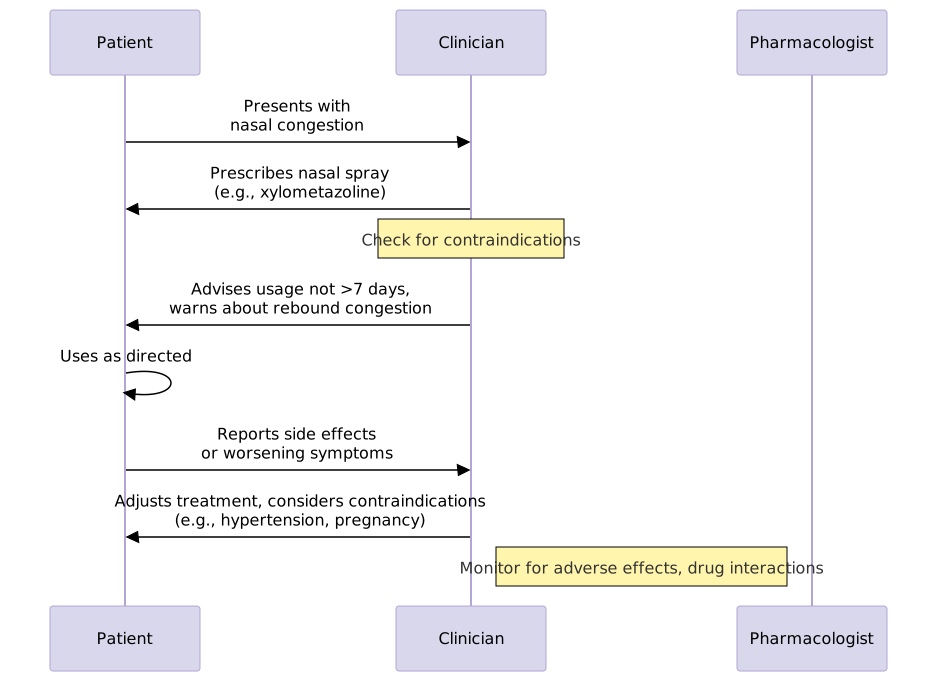
Main insight: Proper sequencing emphasizes cautious use, duration limits, and contraindication screening to prevent adverse effects.
3. Contraindications and Drug Interactions Flowchart

Main insight: Multiple contraindications exist, especially with systemic interactions and mucosal integrity, necessitating screening before prescribing.
4. Pharmacokinetic and Systemic Absorption Pathway

Main insight: While topical, xylometazoline may enter systemic circulation, affecting cardiovascular parameters, especially in vulnerable populations.
5. Concept Map of Contraindications and Side Effects
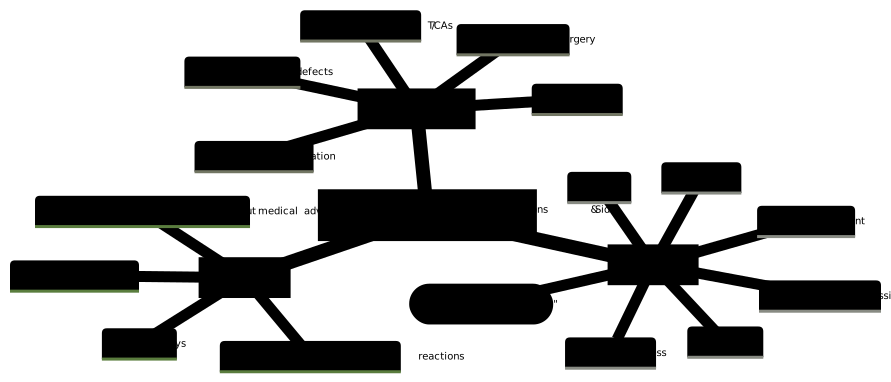
Main insight: Contraindications and side effects are closely linked; awareness is essential for safe use.
6. Relationship Diagram: Decongestant Use and Contraindications

Main insight: Overuse or specific patient conditions contraindicate decongestant application, emphasizing cautious prescribing.
7. Summary of Key Concepts

Main insight: Effective symptom relief depends on understanding pharmacodynamics, contraindications, and interactions to ensure patient safety.
Conclusion
The visualizations synthesize complex relationships between nasal decongestants, their contraindications, pharmacokinetics, and clinical considerations. Proper screening, limited duration, and awareness of systemic interactions are critical for safe application, especially in vulnerable populations such as pregnant women, hypertensive patients, and those with mucosal defects.
Note: This analysis was based on the provided extracts, emphasizing key safety and contraindication themes relevant to healthcare professionals managing nasal decongestant therapies.
Citation Links
| 47 | https://medsafe.govt.nz/hot/alerts/CoughandCold/Minutes2CoughandCold.asp | medsafe.govt.nz | 2022-12-05T11:42:02.000Z | |
|
A second study (Van Heerbeek, 2002) investigated the effect of xylometazoline on eustachian tube function in 80 children with ventilation tubes due to persistent otitis media effusion compared to placebo. Each child was treated with intranasal administration of five drops of 0.05% xylometazoline hydrochloride or placebo. The Group noted this study demonstrated no significant difference on eustachian tube function compared to placebo. The Group noted a further study investigating the effect of phenylephrine (Turner, 1996) on middle ear pressure in children aged six to eighteen months with the common cold compared to placebo.
|
||||
| 159 | https://worldofmedicalsaviours.com/otrivin-nasal-drop/ | worldofmedicalsaviours.com | 2023-10-04T05:53:31.000Z | |
|
It gently improves nasal breathing with help of concentrated salt solutions. The concentrated solutions help draw out excess mucus. Otrivin Extra Dual relief nasal spray This is a combination medication consisting of two products; xylometazoline hydrochloride and ipratropium bromide. Xylometazoline hydrochloride has a decongesting effect whereas the latter product helps cure the runny nose. Otrivin breathe clean comprises of isotonic sea salt solutions and natural glycerine.
|
||||
| 262 | https://doi.org/10.3205/dgkh000416 | Axel Kramer | 2022-07-06T23:59:58.000Z | |
|
Nasal sprays based on saline (0.9%), xylometazoline hydrochloride (0.1%), and the combinations hydroxypropylmethylcellulose/succinic acid/disodium succinate or Galphimia glauca/ Luffa operculata/ Sabadilla were ineffective. The combination of sodium hypochlorite (0.08%) with lithium magnesium sodium silicate achieved a reduction factor of 2.2 , which, however, is not considered sufficient for virucidal activity. Since the product forms a gel matrix that may interfere with the virus, an effect may be achieved in vivo if need be. However, the tolerability of sodium hypochlorite for long-term use requires clarification. 2.2 Preventive efficacy in in vivo and in-use studies Gargling Gargling with hypertonic saline (2% - 3%) 3 times/d significantly shortened the duration of illness from viral influenza, with the reduction in viral shedding reducing the incidence of illness by 35%, even among people living in the same household.
|
||||
| 292 | https://www.medicines.org.uk/emc/product/5984/smpc | medicines.org.uk | 2022-08-18T22:55:56.000Z | |
|
The concomitant use of xylometazoline with monoamine oxidase (MAO) inhibitors or tri- and tetra-cyclic antidepressants, may cause an increase in blood pressure due to the cardiovascular effects of these substances (see Contraindications). No foetal toxicity or fertility studies have been carried out in animals. In view of its potential systemic vasoconstrictor effect, it is advisable to take the precaution of not using Otrivine during pregnancy. No evidence of any adverse effect on the breast-fed infant. However, it is not known if xylometazoline is excreted in breast milk, therefore caution should be exercised and Otrivine should be used only on the advice of a doctor whilst breastfeeding. Otrivine has no or negligible influence on the ability to drive and use machines. The adverse effects listed below are classified by system organ class and frequency according to the following convention: very common ( ≥ 1/10), common ( ≥ 1/100 to 1/10), uncommon ( ≥ 1/1,000 to 1/100), rare ( ≥ 1/10,000 to 1/1,000) or very rare (1/10,000). Hypersensitivity reaction (angioedema, rash, pruritus) Transient visual impairment Excessive administration of topical xylometazoline hydrochloride or accidental ingestion may cause severe dizziness, perspiration, severely lowered body temperature, headache, bradycardia, hypertension, respiratory depression, coma and convulsions.
|
||||
| 293 | https://www.medicines.org.uk/emc/product/6156/smpc | medicines.org.uk | 2022-05-28T10:06:27.000Z | |
|
Tolerance with diminished effect - especially with prolonged and/or heavy use Rebound congestion (rhinitis medicamentosa) - especially with prolonged and/or heavy use Irritation & dryness Excessive administration of topical xylometazoline hydrochloride or accidental ingestion may cause severe dizziness, perspiration, severely lowered body temperature, headache, bradycardia, hypertension, respiratory depression, coma and convulsions. Hypertension may be followed by hypotension.
|
||||
| 294 | https://vev.icu/2-x-xylometazoline-01-drops-10-ml-made-in-poland-free-shipping | vev.icu | 2022-07-03T17:27:32.000Z | |
|
1 ml contains: 1 mg xylometazoline hydrochloride and excipients: disodium phosphate dodecahydrate, sodium dihydrogen phosphate monohydrate, sodium chloride, sorbitol, edetate disodium, benzalkonium chloride, solution; Purified Water. the preparation reduces swelling and congestion of the nasal mucosa, reduces the amount of secretions and facilitates its outflow from the sinuses. the preparation should be used in accordance with the description on the leaflet or as prescribed by the doctor. Adults and children over 12 years of age: 2 to 3 drops in each nostril every 8 to 10 hours. Do not inject more than 3 doses of each nostril a day. Long-term use of the preparation may worsen the symptoms of nasal blockage. Do not use for more than 5-7 days. hypersensitivity to the components of the preparation, if the patient has had the pituitary gland removed or has undergone any other surgery of the nervous system, if the patient has defects or variable nasal mucosa. Before use, read the leaflet that contains indications, contraindications, data on side effects, dosage and information on the use of the medicinal product, or consult your doctor or pharmacist, as each preparationused improperly is a threat to your life or health.
|
||||
| 295 | https://clinicaltrials.gov/show/NCT05474924 | Ibrahim M. Gehad | 2022-07-25T23:59:58.000Z | |
|
... the following technique, where 2 nasal packs soaked in xylometazoline hydrochloride 0.1% " Otrivin adult nasal drops" applied one pack in each nostril for 5 minutes before injection, then using the 0°nasal endoscopy patients receive intrapolyp budesonide injection by 0.5 mg/ml budesonide respules "commercially available as Pulmicort ampules" 1 ml for each nostril using 1 cc 28 gauge needle sterile syringe, where injections carefully distributed amongst visible polyps avoiding visible vessels, No local anesthesia will be used before injections, patients come back to the clinic weekly to complete a series of 5 injections. Condition: CRS Enrollment: 90 Intervention: intrapolyp injection of budesonide in cases of nasal polyps and assessment of side effects compared to systemic steroids ( pulmicort ) Eligibility: Inclusion Criteria: - All patients with type 2 CRSwNP -indicated by elevated serum IgE & high absolute Eosinophilia- with nasal polyps whose - ages between 18 and 60 years old - who don't have any contraindications of systemic steroids such as glaucoma, peptic ulcer, acute psychosis, chronic infections, severe osteoporosis, severe hypertension, uncontrolled diabetes mellitus, history of thromboembolic events
|
||||
| 296 | https://doi.org/10.1111/clr.14377 | Shengchi Fan | 2025-01-31T23:59:58.000Z | |
|
Postoperatively, patients were given oral amoxicillin/clavulanic acid (875/125 mg) (GlaxoSmithKline, London, UK) or clindamycin (300 mg) (Pfizer, New York, USA), twice a day for 1 week; ibuprofen (600 mg) (Pfizer) 4 times a day during meals for 1 week (patients were instructed not to take ibuprofen in the absence of pain); xylometazoline hydrochloride (nasal decongestant) (Novartis, Basel, Switzerland) 1 mg, five drops twice a day for 2 weeks; and 0.2% chlorhexidine rinses (Isdin, Barcelona, Spain) twice a day for 2 weeks.
|
||||
| 297 | https://pillintrip.com/medicine/xylometazoline-hydrochloride | pillintrip.com | 2022-12-05T05:31:39.000Z | |
|
Be careful and be sure to specify the information on the section Pharmacokinetic properties in the instructions to the drug Xylometazoline hydrochloride directly from the package or from the pharmacist at the pharmacy. Systemic absorption may occur following nasal application of xylometazoline hydrochloride solutions. It is not used systemically. The information provided in Preclinical safety data of Xylometazoline hydrochloride is based on data of another medicine with exactly the same composition as the Xylometazoline hydrochloride. .
|
||||
| 298 | https://patient.info/doctor/decongestant-treatments-what-are-the-options-and-what-works-best | patient.info | 2023-10-02T12:31:02.000Z | |
|
GSK's Otrivine Extra Dual Relief is a nasal spray containing active ingredients xylometazoline hydrochloride and ipratropium bromide.
|
||||
| 299 | https://www.tabletwise.net/medicine/xylometazoline-hydrochloride | tabletwise.net | 2023-06-10T04:44:10.000Z | |
|
Xylometazoline Hydrochloride is used for Allergies, Cold, Allergy and other conditions. Detailed information related to Xylometazoline Hydrochloride's uses, side-effects, reviews, questions, interactions, and precautions is as follows:
|
||||
| 300 | https://ppubs.uspto.gov/pubwebapp/external.html?q=(20100029654).pn | 2010-02-03T23:59:58.000Z | ||
|
Xylometazoline Hydrochloride 66.6 71.8 110.8 88.2 Hexamethonium Bromide 84.8 72.6 99.7 92.1 Phentolamine Hydrochloride (2010)
|
||||
| 301 | https://www.lybrate.com/medicine/lactobacillus | lybrate.com | 2023-06-11T00:20:43.000Z | |
|
List of my medication: medoclav (amoxicillin + clavulanic acid) - 3 x 125 mg flavamed (ambroxol hydrochloride) - 3 x 15 mg olint (xylometazoline hydrochloride) 3 times daily ansibell (chlorhexidine dihydrochloride / benzocaine / enoxolone) 5 mg / 4 mg / 3 mg compressed lozenges vitamin c 2 x 500 mg line forte (lactobacillus and bifidobacterium)
|